Talk about important. This is THE most tested subject on the ASCP MT exam - at least based on an unscientific poll of one person. It’s packed full of different topics: Endocrinology? check. Pharmacology? check. Enzymology, Diabetes and Blood gases? check check and check. This subject is essentially a catch-all with a whole variety of different topics - they’re all important!
Tumor markers
Tumor markers are used to monitor response to treatment. Think silly when you need to memorize very plain facts: AFP may not mean anything, but “Aaah! That’s F’in Painful!” might suggest which parts of the body it’s related to.
| Rise of this marker | Is associated with this cancer | Memory hook |
|---|---|---|
| CEA | Colon | “C’ya on the flipside” |
| CA 19-9 | GI, pancreas | |
| AFP | Hepatic, testicular | “Aaah! That’s F’in Painful!” |
| CA-125 | Ovarian | “The ovaries are full of hundreds of eggs” |
| hCG | Testes, ovaries (normally just indicates pregnancy) | |
| PSA | Prostate (< 25% free PSA associated with cancer) |
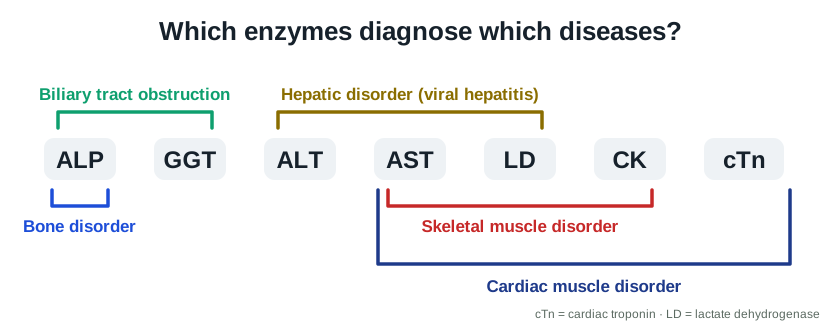
Diagnostic enzymology
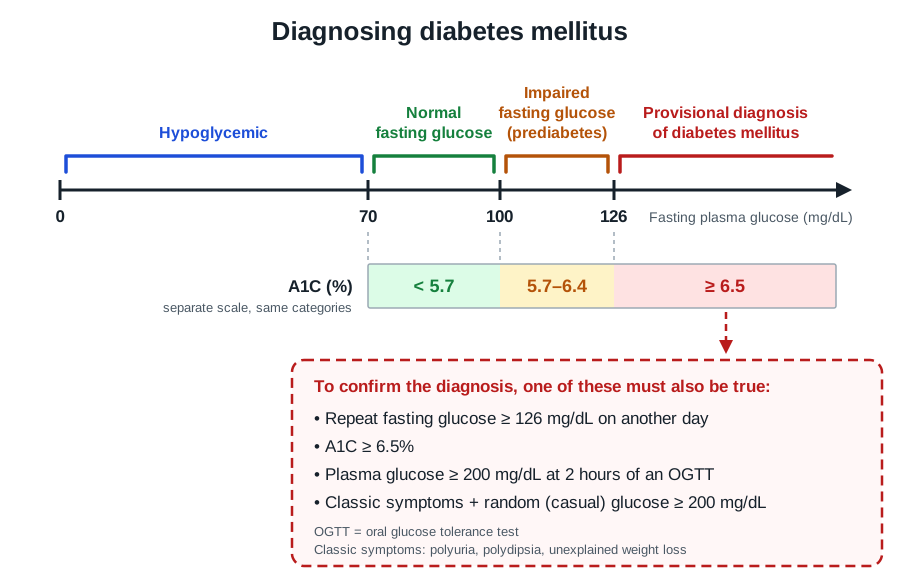
Diagnosing diabetes mellitus
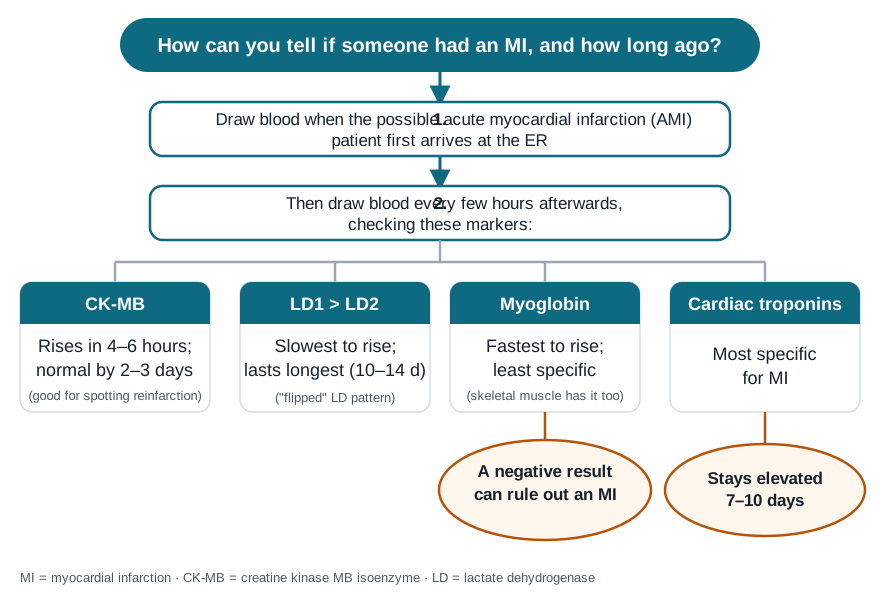
Cardiac markers
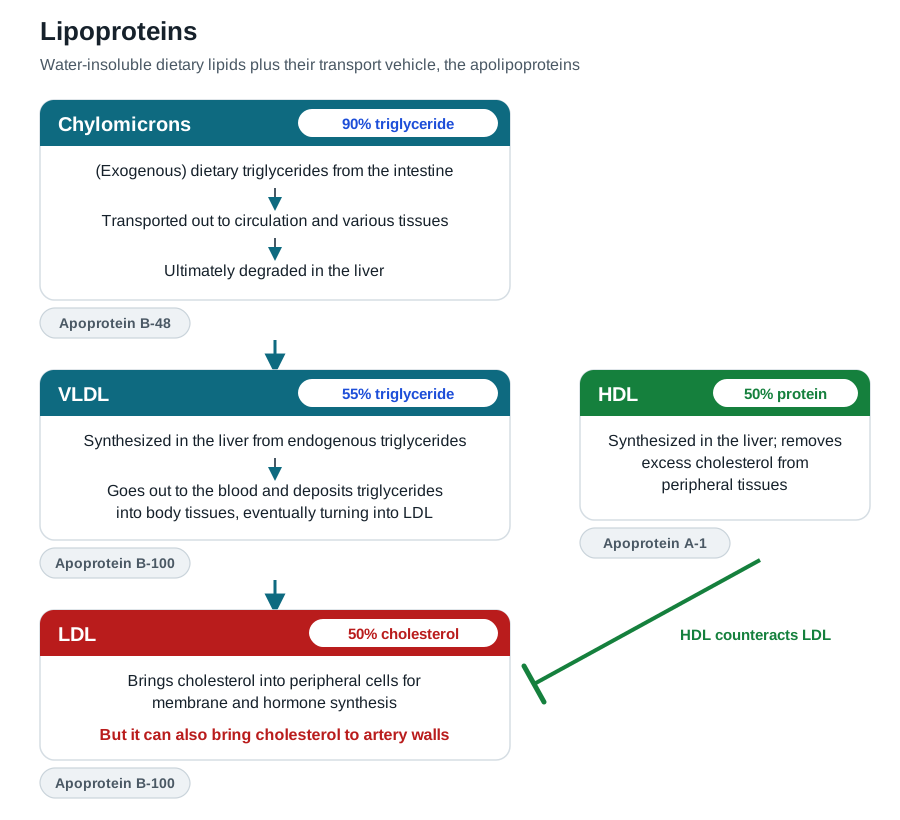
Lipoproteins
Metabolic syndrome
Questions concerning the diagnosis of metabolic syndrome come up fairly regularly during practice exams. These are the NCEP ATP III diagnostic criteria: 3 or more means you’ve got it.
| Criterion | Cutoff |
|---|---|
| Abdominal obesity (increased waist size) | > 40 inches in men; > 35 inches in women |
| Elevated triglycerides | ≥ 150 mg/dL, or drug treatment ongoing |
| Low HDL cholesterol | < 40 mg/dL in men; < 50 mg/dL in women |
| Elevated blood pressure | ≥ 130/85 mmHg, or drug treatment ongoing |
| Elevated fasting glucose | ≥ 100 mg/dL, or drug treatment ongoing |
NCEP ATP III = National Cholesterol Education Program, Adult Treatment Panel III
Acid-base disorders
The pH of plasma depends on pCO₂ regulated by the lungs and the bicarbonate concentration regulated by the kidneys
Essentially, an acid-base disorder is when the 201 ratio of HCO₃⁻0.03 × pCO₂ changes.
| If this is the problem | Then this is the name of the condition | And your body resolves the problem by doing this |
|---|---|---|
| HCO₃⁻ low | Metabolic acidosis | Hyperventilation (blow off CO₂) |
| HCO₃⁻ high | Metabolic alkalosis | Hypoventilation (retain CO₂) |
| pCO₂ high | Respiratory acidosis | Kidneys retain HCO₃⁻, excrete H⁺ |
| pCO₂ low | Respiratory alkalosis | Kidneys excrete HCO₃⁻, retain H⁺ |
Know the reference ranges: pH 7.35–7.45 · pCO₂ 35–45 mmHg · HCO₃⁻ 22–26 mEq/L
I had one very easy acid-base disorder question which I can no longer remember. Don’t go too crazy learning how the Henderson-Hasselbalch equation is derived - it’s only taught in school to fill time. DO know the reference ranges for the blood gases, as well as pH. It might be on your exam!
What else will be on the exam?
It’s very important to know the differences between Prehepatic, Hepatic and Posthepatic Jaundice. Know which type of jaundice results when you have problems like excessive RBC destruction (as during hemolytic disease of the newborn), Criggler-Najar, Dubin-Johnson Syndrome and when an obstruction (like a carcinoma or gallstone) blocks bile flow into the intestines.
Comments